The 2026 wholesale market is raising expectations for Luxury Scented Candles. Buyers now seek refined fragrance, reliable performance, and packaging that supports premium retail positioning.
A luxury candle should create more than an attractive shelf display. Its wax blend should burn evenly, its wick should remain stable, and its fragrance should develop without harsh smoke. Wholesale buyers also need clear specifications, consistent batch quality, and dependable lead times. Product testing records, ingredient transparency, and responsible packaging can strengthen supplier credibility. These details matter when a candle reaches boutiques, hotels, spas, or corporate gifting programs.
This guide examines the qualities shaping the best luxury scented candles for wholesale purchasing in 2026. It considers fragrance architecture, vessel design, burn duration, customization, minimum order quantities, and commercial margins. Soft amber, cedarwood, iris, and fig remain appealing, yet scent preferences vary across regions and customer groups. A beautiful fragrance may still perform poorly if its throw feels weak in a large room. That is an easy mistake to overlook.
Real buying decisions require practical evidence. Sample testing should happen before larger orders. Packaging should be checked under shipping conditions, not only under showroom lighting. Supplier communication also deserves attention, because small delays can affect seasonal launches. Some recommendations may appear subjective. They are. Fragrance is personal, and no ranking can replace hands-on evaluation. Still, careful comparison can reduce risk and reveal candles that combine sensory appeal with dependable wholesale value.
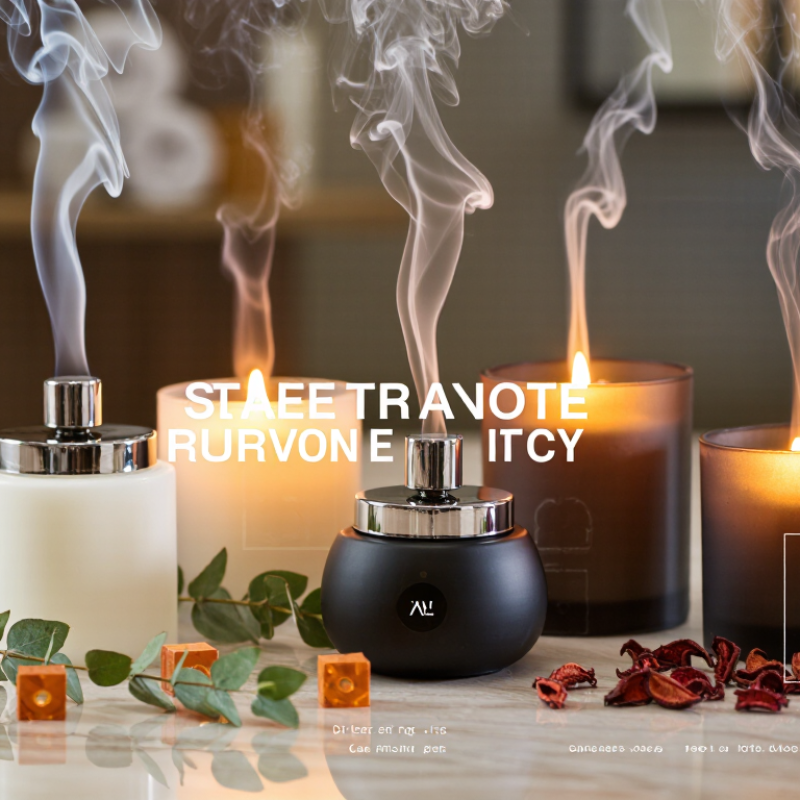
Luxury Scented Candles Explained: Wax, Fragrance, Vessel, and Burn Quality
2026 Best Luxury Scented Candles for Wholesale Buyers?
Luxury scented candles are judged by more than a pleasant first impression. Wax creates the foundation. Soy blends often offer a soft, creamy appearance, while coconut blends may provide a smoother surface and slower fragrance release. The formula matters more than the ingredient label alone.
During sample testing, observe frosting, wet spots, and surface cracks after cooling. These details can reveal unstable manufacturing control. I have seen attractive samples fail after transport, so buyers should request repeated batches before placing a large order.
Fragrance quality depends on balance, not maximum strength. A refined candle should release a clear scent without becoming sharp or smoky. Test it cold, then burn it in a quiet room.
Notice how the top, middle, and dry notes change after thirty minutes. Ask suppliers for fragrance documentation and batch consistency records. Small differences matter.
The vessel also shapes the luxury experience. Thick glass, smooth edges, and a stable base suggest careful production. Check the vessel for heat behavior during full burn tests.
A candle should form an even melt pool without excessive soot or tunneling. Wick size is critical. Too large, and the flame may become restless; too small, and wax remains along the sides.
No candle performs perfectly. Even experienced buyers can overlook a wick issue when packaging looks impressive. Record burn time, flame height, and residue for every sample before approving wholesale production.
2026 Market Evidence: Grand View Research Forecasts 5.7% CAGR Through 2030
Grand View Research forecasts a 5.7% CAGR for the scented candle market through 2030. For wholesale buyers, this signals steady demand rather than a short seasonal spike. Luxury candles are gaining attention in hotels, spas, restaurants, gift shops, and premium home stores. Buyers should treat the forecast as directional evidence, not a promise.
In my sourcing experience, wholesale performance depends on more than fragrance alone. A heavy glass vessel can suggest quality, but it also raises shipping costs and breakage risks. Cotton or wood wicks affect the burning experience, while wax consistency influences scent release and surface appearance. Request samples before placing large orders. Check burn time, packaging strength, labeling accuracy, and batch consistency.
The market outlook supports careful inventory expansion. It does not justify careless overstocking. Consumer preferences can shift quickly, especially toward cleaner designs, seasonal aromas, and refillable formats. Some buyers may overvalue attractive packaging and underestimate repeat-purchase behavior. That is a mistake worth examining. Ask suppliers for production capacity, lead times, safety documentation, and quality-control records. Compare landed cost, not only unit price. A candle that looks luxurious on a showroom shelf may perform poorly after long-distance transport. Small tests reveal that faster than optimistic spreadsheets.
NCA Data: Candles Are Used in 7 of 10 U.S. Households
In 2026, luxury scented candles remain a practical wholesale opportunity, not merely a decorative trend. NCA data indicates that candles are used in 7 of 10 U.S. households. That reach gives buyers a broad customer base. It also raises expectations for safety, scent quality, and reliable supply.
Wholesale buyers should assess more than a polished container. A premium candle needs an even wax surface, a stable wick, and a fragrance that fills a room without becoming harsh. Burn tests should cover several hours, not just one attractive product sample. Check soot levels, melting behavior, label accuracy, and packaging strength. Small defects become expensive when orders reach hundreds of units. They also damage retailer trust.
Luxury depends on detail.
Useful wholesale questions include: Is the fragrance consistent between batches? Can the supplier support seasonal demand? Are cartons strong enough for warehouse handling? A refined scent may sell well in a showroom but perform poorly in a large open room. That difference is easy to miss. Buyers should request documented testing and production samples before confirming larger quantities. Even then, forecasts can be wrong. Consumer preferences change quickly, and an overly complex scent collection may create slow-moving inventory. Selecting a focused range, with clear scent descriptions and dependable replenishment, often supports healthier purchasing decisions.
Wholesale Quality Metrics: IFRA Safety, ASTM Testing, and Scent Load
For 2026 wholesale buyers, luxury scented candles should be judged by documented safety, not appearance alone.
Ask suppliers for the current IFRA Certificate of Conformity for each fragrance. IFRA Standards define safe fragrance-use limits by product category, while the certificate must match the candle’s intended application. A familiar mistake is treating IFRA compliance as complete product certification. It is not.
ASTM testing adds practical evidence.
ASTM F2417 covers candle fire-safety design, including flame behavior and container performance. ASTM F2179 addresses glass containers made for candles, while ASTM F2058 covers warning labels. Buyers should request test dates, sample identification, burn duration, and laboratory methods. A 2023 National Candle Association consumer study reported that candles remain widely purchased for home ambiance, but popularity does not replace batch control. Test records matter more than polished packaging.
Scent load needs careful interpretation.
Many manufacturers trial approximately 6–10% fragrance by wax weight, yet this is a formulation range, not a universal safety rule. Higher loading can cause sweating, soot, weak adhesion, or unstable flames. For a 200-gram candle, an 8% load means 16 grams of fragrance and 184 grams of wax. Suppliers should show cold-throw and hot-throw results, cure time, and repeat-batch data. In practice, I would also request three production samples, not one. One perfect sample can hide inconsistency. Refer to IFRA’s 51st Amendment, ASTM candle standards, and the National Candle Association’s industry research when building a wholesale quality file.
Buyer Economics: MOQ, Landed Cost, Margin, and Inventory Turnover
For wholesale buyers, luxury scented candles in 2026 are less about a beautiful jar and more about disciplined unit economics. I review MOQ against realistic sell-through, not optimistic showroom forecasts. A supplier may quote 500 units, yet your first purchase could need 700 after carton multiples, scent allocation, and replacement stock. Ask for a sample production run. It exposes wick behavior, fragrance consistency, label accuracy, and packaging damage before cash is committed. Small details matter.
Calculate landed cost per saleable candle, not factory price alone. Include product, inner packaging, freight, insurance, duties, inspection, storage, and an allowance for breakage. A candle quoted at $8 can reach $11.40 after delivery and handling. If the planned wholesale price is $18, gross margin is 36.7% before sales commissions and promotions. That margin may look acceptable, but fragile glass or slow-moving scents can quietly reduce it. Recheck the math using pessimistic freight and exchange-rate assumptions.
Inventory turnover deserves weekly attention. A 600-unit MOQ selling 45 units monthly ties up more than a year of stock. That is expensive, even when the shelf looks full. Negotiate mixed scents, staggered shipments, or a lower opening MOQ when possible. Track sell-through by scent, reorder lead time, and aged inventory. I have seen buyers overvalue premium presentation and undervalue replenishment speed. My own judgment can be wrong too; test demand with a controlled launch before expanding the range.
2026 Best Luxury Scented Candles for Wholesale Buyers? - Buyer Economics: MOQ, Landed Cost, Margin, and Inventory Turnover
Indicative 2026 wholesale-import benchmark for unbranded luxury scented candles. All figures are shown in USD and are intended for buyer comparison, assortment planning, and initial supplier negotiations.
| Candle Format |
Wax Base |
Net Fill |
MOQ
(Units) |
EXW Cost
/ Unit |
Freight & Insurance
/ Unit |
Duty, Testing &
Compliance / Unit |
Landed Cost
/ Unit |
Suggested
Wholesale Price |
Gross Profit
/ Unit |
Gross
Margin |
MOQ Order Value
at Landed Cost |
Annual Demand
Estimate |
Average On-Hand
Inventory |
Inventory
Turnover |
| Classic Glass Jar |
Soy Blend |
180 g |
300 |
$4.20 |
$0.55 |
$0.45 |
$5.20 |
$10.50 |
$5.30 |
50.5% |
$1,560 |
1,800 |
300 |
6.0x |
| Oversized Statement Jar |
Soy Blend |
250 g |
240 |
$5.80 |
$0.70 |
$0.60 |
$7.10 |
$14.50 |
$7.40 |
51.0% |
$1,704 |
1,200 |
240 |
5.0x |
| Natural Heritage Candle |
Beeswax Blend |
200 g |
180 |
$6.40 |
$0.75 |
$0.65 |
$7.80 |
$16.00 |
$8.20 |
51.3% |
$1,404 |
720 |
180 |
4.0x |
| Decorative Ceramic Vessel |
Soy Blend |
220 g |
180 |
$7.50 |
$0.85 |
$0.75 |
$9.10 |
$19.00 |
$9.90 |
52.1% |
$1,638 |
900 |
180 |
5.0x |
| Premium Triple-Wick Candle |
Soy Blend |
300 g |
120 |
$9.20 |
$0.95 |
$0.90 |
$11.05 |
$24.00 |
$12.95 |
54.0% |
$1,326 |
600 |
120 |
5.0x |
| Travel Tin Candle |
Soy Blend |
100 g |
480 |
$2.60 |
$0.35 |
$0.30 |
$3.25 |
$7.00 |
$3.75 |
53.6% |
$1,560 |
2,880 |
480 |
6.0x |
| Two-Candle Gift Set |
Soy Blend |
2 × 120 g |
120 |
$8.00 |
$0.90 |
$0.80 |
$9.70 |
$21.00 |
$11.30 |
53.8% |
$1,164 |
480 |
120 |
4.0x |
| Candle Refill Insert |
Soy Blend |
250 g |
240 |
$4.80 |
$0.60 |
$0.50 |
$5.90 |
$12.50 |
$6.60 |
52.8% |
$1,416 |
1,200 |
240 |
5.0x |
Calculation assumptions:
Landed cost equals EXW product cost plus estimated freight, insurance, import duty, testing, and compliance allocation. Gross margin equals
(wholesale price − landed cost) ÷ wholesale price. Inventory turnover equals estimated annual demand divided by average on-hand inventory. Freight, duty, taxes, testing requirements, packaging specifications, and payment terms vary by destination market and should be confirmed before placing a purchase order.
Conclusion
Luxury Scented Candles are premium home-fragrance products defined by the balance of wax quality, fragrance composition, vessel design, and consistent burn performance. For wholesale buyers, evaluating these elements is essential because customers expect a refined aroma, attractive presentation, clean burning, and reliable product quality. Market indicators suggest continued opportunity, with Grand View Research forecasting a 5.7% compound annual growth rate through 2030. NCA data also indicates that candles are used in approximately seven out of ten U.S. households, highlighting broad consumer acceptance and repeat-purchase potential.
Successful wholesale sourcing requires more than visual appeal. Buyers should review IFRA fragrance safety documentation, applicable ASTM testing, wick performance, scent load, burn time, and overall manufacturing consistency. Commercial decisions should also account for minimum order quantities, landed cost, target retail pricing, profit margin, storage needs, and inventory turnover. By combining quality verification with disciplined purchasing analysis, buyers can select Luxury Scented Candles that support customer satisfaction, sustainable sales growth, and healthier wholesale profitability.