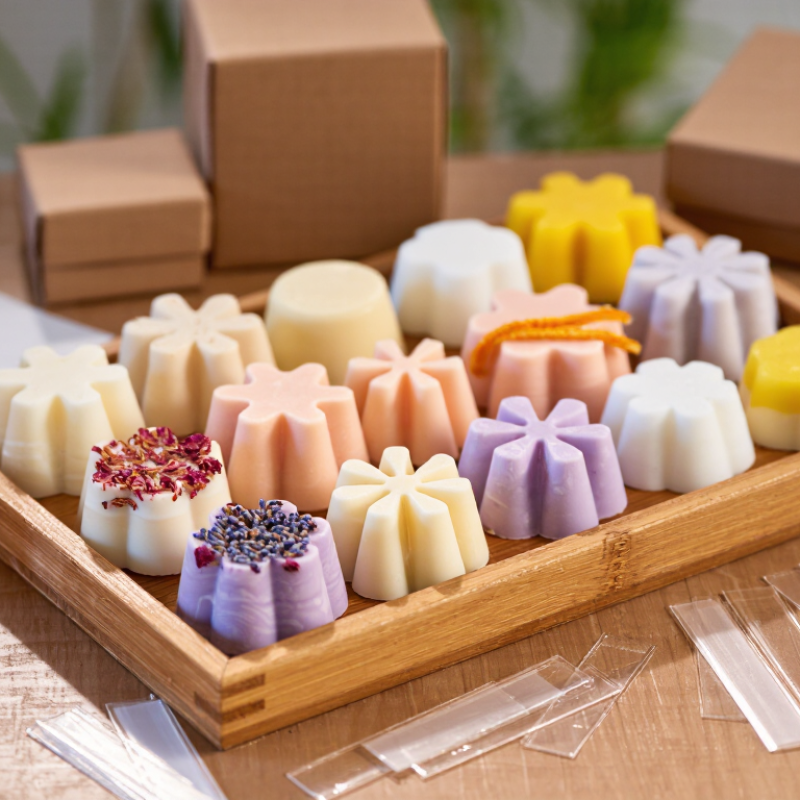
Choosing the best Hand-Poured Wax Melts from China requires more than attractive packaging or a strong first scent. Quality appears in the details: clean wax surfaces, balanced fragrance, consistent color, and a melt pool that develops evenly. A reputable producer should explain its wax type, fragrance percentage, curing process, batch testing, and packaging materials. These details help buyers compare suppliers with greater confidence.
Fragrance educator and chandler Lisa McGarrity says, “A good wax melt should perform beautifully before it tries to impress visually.” This practical principle matters when evaluating Chinese makers. A melt may smell powerful in the package, yet become flat or harsh in a warmer. Another may look slightly imperfect but release a smoother, longer-lasting aroma. Appearance can mislead.
Look closely.
This guide examines hand-poured producers through an experience-based lens. It considers scent clarity, throw strength, texture, burn or warming behavior, ingredient transparency, and manufacturing consistency. It also recognizes an uncomfortable point: no supplier is perfect across every category. One workshop may excel at floral blends but struggle with seasonal consistency. Another may offer excellent customization while providing limited testing information.
Readers should request samples, inspect labels, and compare performance in the same wax warmer. Small tests reveal important differences. A citrus melt should smell fresh, not chemical. A vanilla cube should soften gradually without leaving excessive residue. The strongest choice is not always the cheapest or most luxurious-looking option. It is the supplier that communicates clearly, performs consistently, and responds responsibly when results fall short.
Chinese hand poured wax melts stand out through flexible craftsmanship, detailed scent development, and efficient small-batch production. Grand View Research estimated the global wax melts market at about USD 2.14 billion in 2023, with continued growth expected through 2030. This demand rewards suppliers that can respond quickly to seasonal scents and regional preferences.
A skilled workshop can adjust wax ratios, fragrance concentration, color, and mold design by hand. Picture small citrus cubes with clean edges, or floral melts showing slight shade variation. That variation can signal manual work, but it also requires quality control. Each batch should record pouring temperature, cure time, weight, and fragrance lot. The International Fragrance Association provides safety standards for fragrance materials, while reliable exporters should provide current safety data sheets and clear ingredient documentation.
The strongest Chinese producers combine hand pouring with measured testing. They check melting speed, scent release, surface texture, and packaging stability during transport. According to Fortune Business Insights, consumers increasingly connect home fragrance with relaxation and personal atmosphere, supporting demand for decorative wax products. Yet “hand poured” is not automatically superior. Uneven scent strength, frosting, or soft edges may appear when production lacks control. That is worth admitting. Buyers should request samples, batch records, burn-free melt tests, and independent compliance documents before making large orders. Small details matter.
Hand-poured wax melts from China often use soy wax, paraffin wax, or coconut-soy blends. Each type changes the melting speed, scent strength, and surface texture. Soy wax creates a creamy finish and a gentle scent release. It suits floral, tea, and herbal fragrances. Paraffin usually produces a stronger hot throw, especially in larger rooms. However, some buyers prefer its less natural profile. Coconut-soy wax feels smooth and melts evenly. It can carry soft musk, vanilla, and woody notes well.
Beeswax appears in some small-batch formulas, but it adds a light honey aroma. That natural note may compete with delicate perfumes. Fragrance selection often reflects both local tastes and seasonal ingredients. Osmanthus, white tea, jasmine, citrus peel, plum, sandalwood, and green bamboo are common profiles. Gourmand blends may combine roasted chestnut, milk, caramel, or rice powder. Fresh profiles work well in kitchens and entryways. Floral and woody blends feel better suited to bedrooms or reading corners.
Texture matters. During sample testing, I check the wax surface, melt pool, and scent strength after several hours. A strong cold scent does not always mean a strong hot throw. This is where some evaluations go wrong. Fragrance load, curing time, room size, and warmer temperature all affect performance. Reliable makers should document wax batches, fragrance specifications, and repeat testing results. I also prefer melts without excessive dye, because heavy color can distract from scent quality. Not every blend works. A beautiful fragrance may still need a slower wax, a lighter load, or more curing time.
The best hand-poured wax melts from China are shaped by careful process, not flashy packaging. Artisans usually measure wax and fragrance by weight for consistent batches. They heat the wax slowly, often between 70°C and 85°C, depending on its composition. A clean workspace matters because dust can affect both appearance and scent. The fragrance is blended gradually, then poured into silicone molds or small trays. It is tactile work. Small bubbles may appear.
Curing is where patience becomes important. Fresh melts can smell strong, yet their scent may feel unbalanced. Many makers allow them to rest for several days or longer in a cool, dry room. During this period, the fragrance settles through the wax. I have found that rushed curing can create a sharp opening scent and weaker performance later. A slightly uneven surface is not automatically a defect. It can show genuine hand pouring, although deep cracks, oily patches, or poor labeling deserve closer inspection. Reliable makers record batch dates, material details, and recommended usage temperatures.
Tips: Check the melt’s weight and ingredients before buying. Ask when it was poured and cured. Test one small piece in a suitable warmer first. Store melts away from sunlight and heat. Do not judge quality by color alone; natural variation is common. In my experience, balanced fragrance and transparent production matter more than perfect shapes.
Longer curing allows fragrance and wax crystals to stabilize, which can improve scent throw and surface quality. These are typical artisan-making reference ranges rather than brand-specific results.
Typical curing guidance: soy and coconut-soy blends often benefit from about 10–14 days, beeswax about 7 days, and paraffin blends about 3–7 days.
Choosing the best hand-poured wax melts from China requires more than attractive packaging. Grand View Research valued the global home fragrance market at about USD 13.2 billion in 2023, showing strong demand but not guaranteed quality. I inspect the wax surface, fragrance consistency, and batch labeling. Smooth edges and a clean pour suggest control, although they cannot prove purity. Ask for the wax type, fragrance load, production date, and safety data sheet. Vague answers are a warning.
Scent performance depends on more than strength. A reliable melt should release fragrance evenly after several minutes, without sharp smoke-like notes or greasy residue. IFRA Standards provide usage limits for fragrance ingredients, so suppliers should identify compliance for the intended product category. I also prefer suppliers that provide allergen information and basic stability testing. The scent may smell excellent cold but fade quickly when heated. That weakness is easy to miss.
Safety still matters with electric warmers. The U.S. Consumer Product Safety Commission and NFPA recorded thousands of residential candle fires annually, although wax melts do not use an open flame. Keep melts away from children, pets, and flammable surfaces. Check heat tolerance and warning labels. A polished catalog is not evidence. My own evaluation can be imperfect, especially when scent preference affects judgment. Independent testing remains more reliable than confident sales language.
| Evaluation Area | Metric | Practical Reference | How to Check | Quality Interpretation |
|---|---|---|---|---|
| Wax Composition | Wax identification | The wax type and any blend should be clearly declared. | Request the technical data sheet and compare it with the product description and label. | Clear composition supports repeatability, correct melting behavior, and appropriate safety instructions. |
| Appearance | Surface finish and color consistency | No major cracks, wet spots, frosting that affects appearance, or unmixed pigment deposits. | Inspect several pieces from the same batch under consistent lighting. | Minor frosting can occur naturally in some waxes, but large defects may indicate cooling or mixing problems. |
| Mold Quality | Shape integrity and release quality | Edges should be defined, pieces should separate cleanly, and no loose particles should be present. | Check multiple pieces for deformation, trapped debris, and uneven bases. | Consistent molding improves portion control and makes scent performance easier to compare. |
| Fragrance Documentation | Ingredient and compliance information | A fragrance specification, allergen information where applicable, and a current safety data sheet should be available. | Ask for documents relevant to the destination market and intended product use. | Documentation is more reliable than claims such as “natural,” “non-toxic,” or “chemical-free.” |
| Fragrance Load | Fragrance percentage by weight | A controlled, wax-compatible level is preferable; many formulations fall around 6–10%, but the supplier’s wax and fragrance limits must govern. | Confirm the formula by weight and compare it with the wax supplier’s maximum recommendation. | More fragrance does not automatically mean stronger scent; excessive loading may cause sweating, poor structure, or residue. |
| Scent Accuracy | Cold throw versus hot throw | The melted scent should remain recognizable and balanced, without a strong burnt, oily, or solvent-like note. | Evaluate each sample before melting and again after 30–60 minutes in the same warmer. | A strong cold scent alone does not prove good performance during melting. |
| Scent Strength | Room coverage and intensity | The fragrance should be noticeable in the test room without becoming harsh or rapidly disappearing. | Use the same warmer, room size, melt quantity, and ventilation for every sample. | A controlled blind test is more meaningful than comparing samples under different conditions. |
| Longevity | Usable scent duration | Many wax melts provide several hours of scent per portion, but actual duration depends on formula, warmer temperature, room size, and ventilation. | Record the time until the scent becomes weak, not merely the time until the wax is fully melted. | Longer duration is valuable only if the scent remains pleasant and stable. |
| Melt Behavior | Melting speed and residue | The piece should melt evenly and leave no unusual sludge, excessive oil separation, or heavy discoloration. | Test the same mass in the same warmer and inspect the liquid wax after cooling. | Uneven melting can indicate unsuitable wax selection, poor blending, or inconsistent pouring. |
| Safety Labeling | Usage warnings and instructions | Packaging should state that the product is for approved wax warmers, not for direct consumption, and must be kept away from children and pets. | Check for directions, ventilation guidance, spill warnings, and instructions for removing cooled wax. | Complete labeling reduces misuse and supports responsible retail distribution. |
| Packaging Protection | Heat, moisture, and transit resistance | Pieces should arrive intact, clean, and separated without excessive melting or fragrance leakage. | Perform a transit simulation or inspect samples after exposure to normal shipping conditions. | Good packaging preserves appearance and prevents contamination or scent loss during storage. |
| Batch Consistency | Variation between production batches | Color, weight, texture, and scent should remain within documented internal tolerances. | Compare retained samples from at least two production batches using the same test method. | Reliable batch control is essential for repeat orders and customer satisfaction. |
| Storage Stability | Appearance and scent after storage | Samples should remain structurally sound and retain an acceptable scent after storage away from heat, sunlight, and moisture. | Review samples after a defined storage period and record temperature, light, and packaging conditions. | Stability testing helps identify sweating, fading, frosting, and fragrance migration before shipment. |

Finding the best hand poured wax melts from China starts with the supplier, not the scent list. Look through established wholesale marketplaces, manufacturer directories, and trade exhibitions with clear business information. Reliable makers usually show their workshop, pouring process, wax types, and packaging details. Ask whether production is genuinely hand poured. Some listings use that phrase loosely.
Request samples before placing a larger order. I prefer testing melts in a small room first, then checking scent strength after several uses. Ask for ingredient information, safety documents, batch details, and fragrance compliance records for your selling region. Soy, beeswax, and blended formulas can perform differently. A beautiful sample may still arrive with weak fragrance or uneven color. That happened to me once, so I now test several batches.
Direct communication matters. Use video calls to inspect filling areas, cooling racks, labeling, and storage conditions. Read recent buyer feedback, but do not trust perfect ratings alone. Ask about minimum order quantities, custom molds, lead times, sample fees, and replacement policies. A dependable supplier answers specific questions clearly and admits limitations. Compare at least three quotations, including shipping and packaging costs. China has many capable workshops, yet quality control varies. A small trial order is slower, but it can reveal frosting, cracks, poor packaging, or inconsistent fragrance before your customers do.
Flexible workshops can adjust wax ratios, scent levels, colors, and mold designs. Small batches support seasonal and regional preferences. Handmade does not guarantee perfection.
Makers weigh wax and fragrance carefully. They heat the mixture slowly, often between 70°C and 85°C. Then they pour it into silicone molds or trays. Small bubbles may appear.
Curing allows fragrance to settle through the wax. Many makers rest melts for several days in a cool, dry room. Rushed curing may create a sharp opening scent and weaker later performance. Patience helps.
Slight shade changes or uneven surfaces can reflect manual pouring. Deep cracks, oily patches, and soft edges deserve closer inspection. Appearance alone can mislead.
Request ingredient details, safety documents, batch dates, pouring temperatures, and curing times. Ask for fragrance lot information and recommended usage temperatures. Records matter.
Test one small piece in a suitable warmer. Check melting speed, scent strength, surface texture, and packaging stability. Try several batches, not just one attractive sample. Test first.
Consider established wholesale platforms, manufacturer directories, and trade exhibitions with clear business information. Inspect workshops through video calls when possible. Ask to see filling areas, cooling racks, and storage spaces.
Ask about minimum quantities, custom molds, sample fees, lead times, shipping costs, and replacement policies. Compare at least three complete quotations. A small trial order can reveal problems early.
Keep them away from sunlight and heat. Use a cool, dry storage area with stable packaging. Strong color is not proof of quality. Balanced fragrance matters more.
China’s Hand-Poured Wax Melts stand out for their combination of skilled craftsmanship, creative design, and flexible fragrance development. Artisans commonly work with soy, beeswax, paraffin, or blended waxes, selecting each type for its appearance, melting behavior, and scent diffusion. Popular fragrance profiles range from floral and fruity notes to woody, herbal, sweet, and seasonal combinations, offering options for many preferences.
During production, the wax is carefully heated, mixed with fragrance, poured into molds, and allowed to cure so the scent can develop evenly. When evaluating quality, buyers should consider clean ingredients, accurate labeling, secure packaging, smooth texture, consistent color, and a balanced fragrance that performs well without being overpowering. The best products are typically found through reputable craft marketplaces, specialty home-fragrance stores, and reliable direct suppliers that provide clear product details and transparent customer feedback.