Choosing the best Car Parfum Spray is less about buying the strongest scent and more about finding one that suits your cabin, habits, and comfort. A bottle that smells gentle in a shop may feel overpowering after an hour in a warm, closed car. Small details matter: where the spray is applied, how much is used, and whether the fragrance lingers on upholstery.
The U.S. Environmental Protection Agency’s The Inside Story: A Guide to Indoor Air Quality reports that concentrations of some pollutants can be two to five times higher indoors than outdoors. This is not a car-specific measurement, but it offers a useful reminder: enclosed spaces deserve careful attention. The International Fragrance Association’s standards also provide a professional reference for fragrance ingredient use, though they do not guarantee that every scent will suit every driver. A pleasant smell is not automatically a comfortable one. Too strong? A real possibility.
This guide explains how to compare scent families, concentration, spray format, and ingredient information before choosing. Test a small amount, follow the product label, and allow the cabin to ventilate. Notice whether the fragrance remains comfortable during a short drive, not just during the first few minutes. If passengers find it irritating, or it distracts you, choose a milder option or stop using it. There is no perfect scent for everyone, and I admit that “fresh” can mean very different things to different people.
What Car Parfum Spray Is and How It Works
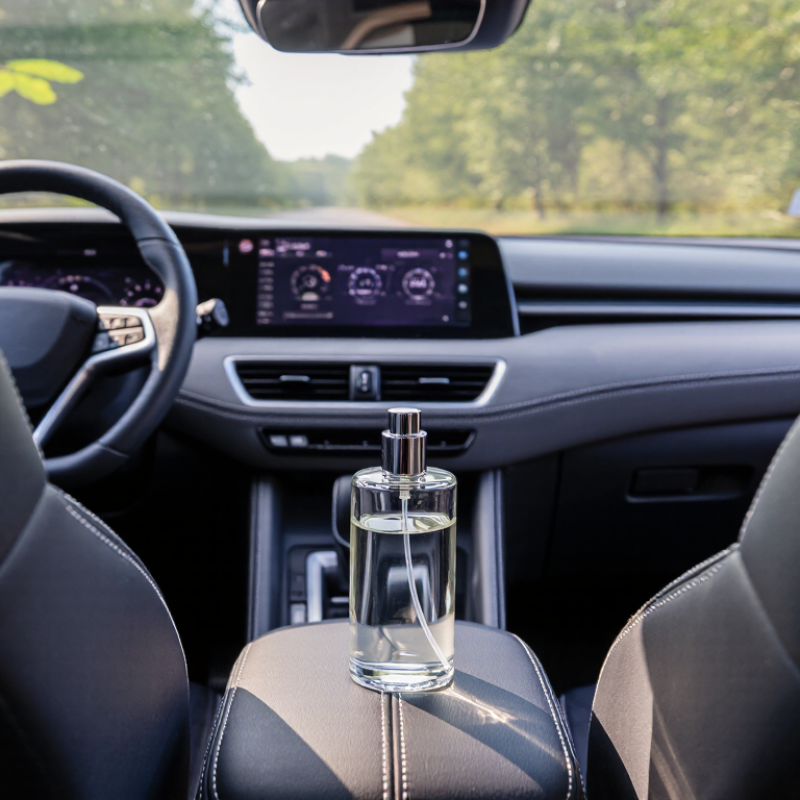
Car parfum spray is a scented liquid designed to add fragrance to a vehicle’s cabin. Most formulas combine fragrance materials with a carrier, such as alcohol or another solvent. When sprayed, tiny droplets disperse into the air. As the carrier evaporates, fragrance molecules remain detectable and reach the nose. The scent may seem stronger in a warm, enclosed cabin, where airflow is limited. A small spray can be enough.
It does not usually remove the source of an unpleasant smell. It changes what you notice by introducing a different scent. If damp floor mats or leftover food cause the odor, clean and dry those areas first. Otherwise, the two smells may mix into something less pleasant. That happens easily. Think of the spray as a finishing touch, not an air cleaner.
Use it sparingly and follow the product’s directions. Spray into open cabin air, away from your face, windows, screens, and controls. Some surfaces can stain or become slippery, so avoid direct application unless the label allows it. In a car with fabric seats, test an inconspicuous spot before treating any surface. I’d start with one brief spray, then wait a few minutes with the doors open. More is not always better; an intense fragrance can distract or irritate passengers, and preference is surprisingly personal.
How to Match a Fragrance to Your Preferences
How to Choose the Best Car Parfum Spray?
How to Match a Fragrance to Your Preferences
Start with scents you already enjoy, then consider how they feel in a small cabin. Fresh citrus and green notes can feel crisp, while soft woods may seem warmer and more settled. Sweet vanilla can feel cozy, but become cloying in a compact car. Grand View Research estimated the global car air freshener market at USD 2.66 billion in 2023. That figure shows strong interest in scented cabins, not a universal preference. Your own comfort matters more.
Tips: Spray once onto a test card, not directly onto seats or trim. Smell it outside the car, then again after ten minutes. The opening note can be misleading. Keep the bottle secured, and use less than you think you need.
Notice how the scent changes during an ordinary drive. Heat, sunlight, and lingering food odors may alter your impression. A fragrance that seems gentle in a cool room might feel too strong after the car warms up. Try one scent at a time, and give yourself a day before deciding. Even careful testing can mislead; personal preferences shift, and that is worth admitting.
Which Ingredients and Safety Features to Check
Before choosing a car parfum spray, read the full ingredient list and usage directions. Look for the fragrance components and the carrier, such as water or alcohol. “Natural” does not automatically mean gentle; some essential oils can irritate sensitive skin or trigger reactions. If the label lists fragrance allergens, check them against known sensitivities. A clear ingredient list is useful, though labels can still feel vague. That is worth noticing.
Check the safety instructions before spraying. Keep the product away from eyes, skin, and children, and avoid spraying near flames if it contains alcohol. Use it in a ventilated car, and never spray directly onto dashboards, leather, or screens unless the directions say it is safe. Test a small, hidden area first. In a warm parked car, strong scents may feel much more intense. Less is better. If anyone feels discomfort, stop using it and air out the vehicle.
Tips: Choose a sealed bottle with readable directions and an intact sprayer. Start with one brief spray, then wait before adding more. Notice how the scent changes after a few minutes; your first impression may not last. Check storage and expiry guidance, too.
How to Compare Scent Strength and Staying Power
When comparing car parfum sprays, separate scent strength from staying power. Strength is how noticeable a fragrance feels just after spraying; staying power is how long it remains detectable. A strong opening can fade quickly. A softer scent may linger through a commute. Test one spray on a paper strip, then smell it after ten minutes and again after an hour. Keep the distance and number of sprays consistent. Small differences matter. In a warm parked car, a fragrance may seem sharper, while open windows can soften it. Don’t judge by the first sniff alone.
For a realistic check, use the spray as directed on a removable card or suitable surface. Avoid steering wheels, screens, and upholstery unless the label says they are safe. Note the scent at departure, midway, and after parking. Ask a passenger, too; your nose can adapt before theirs does. Check whether the fragrance stays balanced or becomes cloying in a small cabin. “Long lasting” claims vary with heat, airflow, and materials, so treat them as estimates. I may be overthinking it, but the strongest option is not always the most comfortable. A gentler scent can be easier to live with, especially on a slow drive. Allow time between sprays.
How to Choose the Best Car Parfum Spray?
Compare typical fragrance wear-time estimates by concentration. Bars show approximate ranges, not guaranteed performance.
How to use this guide: Higher concentration can suggest a stronger or longer-lasting fragrance, but it does not guarantee either. These estimates refer to typical wear on skin, not performance in a car. Vehicle temperature, ventilation, surfaces, and spray amount can change how long a scent lasts. Test a car spray in your own vehicle and choose a strength that feels comfortable.
How to Test a Spray in Your Vehicle Before Buying
How to Choose the Best Car Parfum Spray?
How to Test a Spray in Your Vehicle Before Buying
Test the scent while your car is parked outdoors, with the engine off. Start with one light spray on a removable card, not on seats, trim, or vents. Check the product directions first. Materials can stain, and residue near controls is best avoided. Let the scent settle for several minutes, then sit inside with the windows partly open. Notice whether it feels pleasant, sharp, or overpowering. A quick sniff at the bottle is not enough.
Give it time. Smell the cabin again after 15 minutes, then after a short drive with ventilation on. Ask a passenger for an independent opinion; drivers can become used to a scent quickly. The U.S. Environmental Protection Agency’s The Inside Story: A Guide to Indoor Air Quality reports that some indoor pollutant levels can be two to five times outdoor levels, and occasionally much higher. Those figures describe buildings, not cars, but they underline why a confined space deserves a cautious test. Keep the dose small. If anyone feels irritation, ventilate and stop using it. Even this routine has limits: temperature, airflow, and upholstery can change how a fragrance develops. A test in cool weather may not predict a hot afternoon.
Conclusion
Choosing the right Car Parfum Spray starts with understanding how it works: a fine mist releases fragrance into the cabin, where airflow helps distribute the scent. Consider the atmosphere you want to create and choose a fragrance profile that suits your preferences, such as fresh, warm, or subtle. Since scents can feel different in a small enclosed space, a balanced option is often more comfortable for everyday driving.
Before buying, review the ingredient information and any stated safety guidance, especially instructions for use around vehicle surfaces and ventilation. Compare scent strength and expected staying power, keeping in mind that heat, airflow, and cabin size can affect how long a fragrance lasts. Whenever possible, test a small amount in your vehicle first. Let the scent settle, then assess its intensity and how it develops over time before deciding whether it is the right fit.