Choosing a Luxury Car Diffuser Refill in 2026 requires more than selecting a pleasant scent. The right refill should match your vehicle, driving habits, and personal comfort. A fragrance that feels elegant in a showroom may become overpowering during a two-hour commute. Small details matter, including bottle size, diffuser compatibility, ingredient transparency, and scent performance in changing temperatures.
Experienced drivers often notice differences after several weeks. Citrus notes may feel bright on a morning drive, while cedar, amber, or soft leather can create a calmer cabin atmosphere. However, fragrance strength is highly personal. Ventilation, cabin size, and seasonal heat also affect how a Luxury Car Diffuser Refill performs. Check the manufacturer’s fitting instructions carefully. A refill should sit securely and avoid contact with sensitive interior surfaces.
Reliable choices usually come from brands that explain their ingredients, testing practices, and scent concentration clearly. Look for sealed packaging, batch information, and realistic performance claims. “Long-lasting” does not always mean better. Sometimes, a gentler formula feels more refined and causes less fatigue. I have learned that scent memory can be misleading; a fragrance may seem impressive for ten minutes, then become distracting. That is worth considering.
This guide explores how to compare scent families, refill systems, materials, longevity, and value in 2026. It also considers practical concerns, such as heat exposure and easy replacement. Personal preference still matters most. Even a premium refill can feel wrong in the wrong cabin.
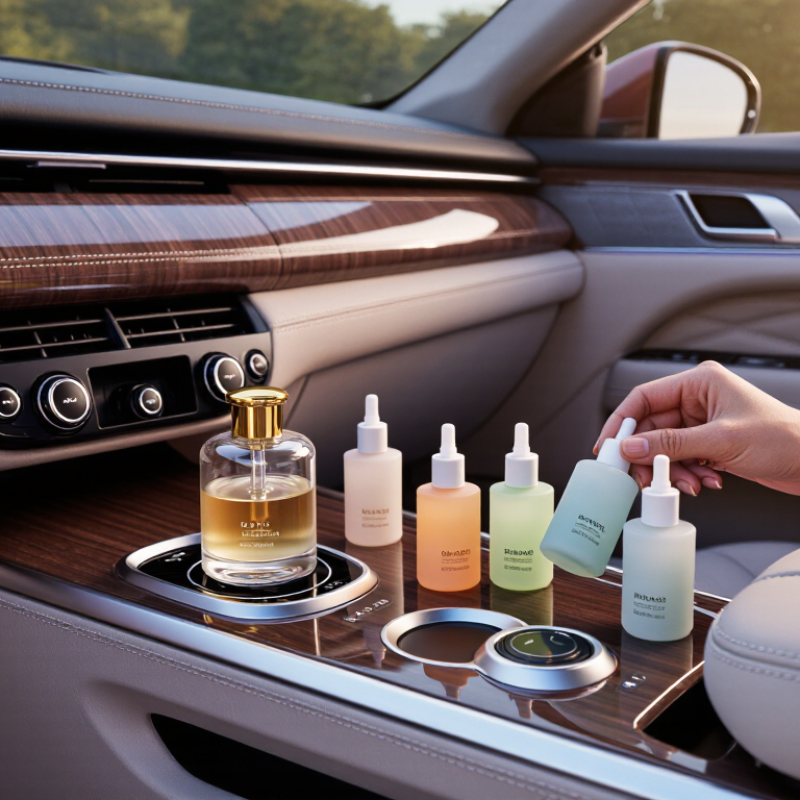
Define Refill Types and IFRA Category 10A Safety Limits
Choosing a luxury car diffuser refill starts with identifying its delivery method.
A liquid refill feeding a wood cap or porous stone releases fragrance slowly.
A vent clip uses airflow.
An absorbent card releases scent from a treated surface.
A spray refill behaves differently and needs separate exposure consideration.
For vehicle air-freshener sprays, IFRA Category 10A may apply.
Its safety limit is not one universal percentage.
The permitted level depends on the fragrance formula and appears on the supplier’s current IFRA Certificate of Conformity.
That figure applies to the finished product, not the undiluted fragrance oil.
Check the certificate, safety data sheet, allergen information, and intended use together.
Do not copy a limit from another formula.
A passive liquid refill may fall under another IFRA air-care category, often the category covering continuous-release products.
The exact classification should match the product design and instructions.
Skin contact also matters.
A leaking refill touching a steering wheel, hand, or upholstery creates a different practical risk than a sealed cartridge.
Use a stable reservoir, clear dosage guidance, and a cap that resists heat and movement.
Small details matter.
I once assumed stronger fragrance meant better quality.
It often meant faster fatigue, residue, or discomfort.
That assumption needs reconsideration.
Temperature changes inside a parked car can also alter evaporation, so laboratory testing at one room temperature is not enough.
Compare Oil, Alcohol, and Water Bases by Flash Point and VOC Data
How to Choose a Luxury Car Diffuser Refill in 2026?
The base affects safety, scent strength, and cabin comfort. Check the safety data sheet before buying any refill. Flash point shows when vapors may ignite near heat or flame. Alcohol-based refills often have lower flash points, sometimes below typical cabin temperatures. They evaporate quickly and can project scent strongly. Oil-based formulas usually evaporate more slowly. However, their flash points vary widely with solvents and fragrance materials. Water-based refills are generally less flammable, but they may need solubilizers and preservatives. Their scent can feel softer or less consistent.
VOC data deserves equal attention. VOC means volatile organic compounds, not automatically harmful compounds. Review the total VOC percentage and the listed ingredients. A low-VOC formula may still feel intense if its fragrance is concentrated. I once preferred a strong oil refill, but its lingering film was inconvenient on a warm dashboard. My judgment was incomplete. Temperature, airflow, and dosage changed the result.
Tips:
Compare flash point, VOC content, and recommended temperature ranges. Choose packaging that seals tightly and prevents leaks. Test one small amount first. Keep the diffuser away from direct sunlight and hot surfaces. Avoid assuming “water-based” means completely chemical-free. Ask for current technical documents, especially when the formula has changed. A refill should smell refined, not overpowering, after several hours.
Match Fragrance Concentration with ISO 16000-6 Indoor-Air Testing
For a 2026 luxury-car diffuser refill, fragrance strength should not be judged by scent alone. A powerful first impression may indicate excessive volatile organic compound release. The U.S. Environmental Protection Agency reports that indoor VOC concentrations can be two to five times higher than outdoor levels, and sometimes much higher. Vehicle cabins are smaller, warmer, and less ventilated than most rooms.
Match the refill’s concentration with measured cabin-air results. ISO 16000-6 uses thermal desorption and gas chromatography-mass spectrometry to identify and quantify VOCs. Test the diffuser at realistic settings, including closed windows, recirculated air, and summer heat. Record results in micrograms per cubic meter, not only liquid fragrance percentage. The percentage in the bottle does not equal the concentration inside the cabin. Small detail. Big difference.
Use the German Environment Agency’s TVOC evaluation bands as a practical reference, while remembering that they were developed for indoor environments. Levels below 0.3 mg/m³ are generally considered low, while 1–3 mg/m³ suggests increased concern. These ranges are not a complete vehicle-safety verdict. Individual ingredients still matter. A refill may pass a TVOC screen yet cause discomfort for sensitive passengers. My own testing mistake was trusting a pleasant scent after ten minutes. Longer sampling showed a slower, persistent rise. Retest after ventilation changes, because a single measurement can mislead. (ISO 16000-6:2021; U.S. EPA, The Inside Story: A Guide to Indoor Air Quality; German Environment Agency, TVOC indoor-air evaluation guidance)
2026 How to Choose a Luxury Car Diffuser Refill? - Match Fragrance Concentration with ISO 16000-6 Indoor-Air Testing
| Fragrance Concentration in Refill |
Typical Fragrance Load |
Expected Cabin Intensity |
Best Use Case |
Recommended ISO 16000-6 Testing Approach |
Key Compounds to Monitor |
Selection Guidance |
| Low |
1–3% fragrance mixture |
Subtle and close-range; usually suitable for drivers who prefer a light scent. |
Small cabins, short journeys, warm climates, or continuous low-output diffusers. |
Test after a defined conditioning period at the intended diffuser setting. Include a clean-cabin baseline and a blank refill control where possible. |
Volatile organic compounds (VOCs), including selected terpenes, aldehydes, esters, and solvent-related compounds. |
Choose this level when odor comfort and low overall VOC loading are higher priorities than strong projection. |
| Medium |
4–8% fragrance mixture |
Noticeable but generally balanced when ventilation is used normally. |
Most passenger vehicles and mixed driving conditions. |
Measure cabin air under repeatable temperature, ventilation, occupancy, and diffuser-output conditions. Report individual VOCs and the total identified VOC profile. |
Fragrance-related VOCs such as limonene, linalool, pinene, benzyl compounds, and other formulation-specific markers. |
Often the most practical starting point, but the refill should still be checked against the diffuser’s actual evaporation rate. |
| High |
9–15% fragrance mixture |
Strong and persistent; may feel intense in a closed cabin. |
Large cabins, intermittent use, or users who want rapid fragrance impact. |
Use time-resolved sampling or multiple sampling intervals because concentration can change quickly after activation. Document peak and stabilized conditions separately. |
High-emission fragrance markers, oxidation products, aldehydes, and other VOCs identified by the analytical laboratory. |
Use only when the diffuser output is adjustable and the vehicle can be ventilated effectively. |
| Very High |
>15% fragrance mixture |
Very strong; increased risk of odor fatigue or discomfort for sensitive occupants. |
Short-duration use only, subject to the diffuser manufacturer’s compatibility and safety limits. |
Require a conservative test design with baseline, activation, peak, and recovery measurements. Avoid interpreting one single sample as representative of all driving conditions. |
All detected fragrance VOCs, possible reaction products, and compounds that rise substantially above the cabin baseline. |
Generally unsuitable for continuous operation unless emission output is tightly controlled and test results support the intended use. |
Estimate Refill Longevity from Reservoir Volume and Release Rate
Choosing a luxury car diffuser refill starts with measurable endurance, not elegant packaging. Use this simple estimate: refill life in days = reservoir volume in millilitres ÷ release rate per day. An 8 mL reservoir releasing 0.25 mL daily should last about 32 days. A 12 mL reservoir releasing 0.18 mL daily may last 67 days.
Check the technical sheet carefully. Release rates can change with cabin temperature, airflow, and diffuser settings. A parked car in direct summer sunlight may evaporate faster than laboratory conditions suggest. ASTM E1593 describes controlled testing for fragrance product emissions, but real vehicles remain less predictable. The European Chemicals Agency also emphasizes exposure assessment and ingredient transparency for fragranced mixtures. These references support careful comparison, not blind confidence.
Industry market data adds useful context. Grand View Research reported continued growth in the global car air freshener market, driven partly by premium fragrance formats and refillable systems. However, market growth does not prove longer refill life. I once estimated a refill would last 60 days, based only on its volume. It lasted closer to 44 days in frequent city driving. That mistake matters. For practical buying, reduce the laboratory estimate by 15–30%, then compare the adjusted cost per day. A refill with a larger reservoir may still perform poorly if its release rate is unnecessarily high. Ask for volume, tested output, and test conditions. Small details matter.
2026 How to Choose a Luxury Car Diffuser Refill?
Estimate refill longevity from reservoir volume and average fragrance release rate.
Estimated longevity is calculated as reservoir volume ÷ average release rate.
The comparison uses common refill volumes from 8 to 15 mL and average release rates from
0.10 to 0.18 mL per day. Actual performance can vary with temperature, ventilation,
fragrance viscosity, and diffuser settings.
Conclusion
Choosing a Luxury Car Diffuser Refill requires more than selecting a pleasant fragrance. First, identify the refill type—oil-based, alcohol-based, or water-based—and review its intended use under IFRA Category 10A safety limits. Compare flash points, VOC levels, evaporation behavior, and material safety to determine which formula is appropriate for an enclosed vehicle interior. Fragrance concentration should also be evaluated alongside ISO 16000-6 indoor-air testing data, helping confirm that the scent is effective without becoming overwhelming or unsuitable for regular use.
To estimate service life, divide the reservoir volume by the expected release rate and adjust for temperature, ventilation, and usage settings. Before installation, verify that the refill matches the diffuser’s dimensions and connection system. Check for secure sealing, leakage resistance, and compatibility with plastics, elastomers, coatings, and other materials within OEM tolerances. A well-selected refill should provide balanced fragrance performance, predictable longevity, and reliable operation while supporting a comfortable and responsibly designed cabin environment.