Explore our high-performance wholesale candle wax raw materials, hand-poured finished candles, and customizable OEM solutions manufactured for international retail distributors and luxury brands.
How advanced lipid chemistry, thermal analysis, and polymorph stability engineering are reshaping commercial OEM candle production.
Vegetable waxes—particularly 100% hydrogenated soybean oil—naturally undergo polymorphic phase transitions (beta-prime to beta crystals), leading to surface frosting and sinkholes during storage. Our proprietary processing utilizes tailored cooling thermal curves and micro-dosed botanical additives (such as hydrogenated rapeseed and coconut lipid fractions) to lock the wax into a permanent beta-prime structure, providing a smooth finish without needing synthetic paraffin modifiers.
Modern luxury brands demand scent loads exceeding 10% to 12% without oil sweating or wick clogging. Our technical R&D laboratory measures Critical Micelle Concentration (CMC) within liquid triglyceride matrices. By balancing medium-chain triglycerides (MCT) with long-chain fatty acids, our custom wax bases achieve optimal binding efficiency for complex synthetic and natural essential oil accords, ensuring exceptional Cold Throw (CFT) and Hot Throw (HFT).
Engineered wicks must match the specific viscosity and melting kinetic curve of custom wax blends. We conduct differential scanning calorimetry (DSC) and thermogravimetric analysis (TGA) on every OEM batch to calibrate capillary draw rates. Combined with unbleached cotton and wood wicks, our non-toxic wax formulas produce virtually zero soot particles, meeting stringent EU EN 15426 (Sooting Behavior) and EN 15427 (Fire Safety) parameters.
Key market forces driving global buyer specifications, regulatory compliance, and raw material sourcing over the next decade.
Global procurement teams are moving away from unverified palm oil and petroleum-derived paraffin wax due to impending regulatory hurdles such as the EU Deforestation Regulation (EUDR) and Scope 3 emissions reporting. B2B buyers now mandate fully traceable, non-GMO soybean and coconut wax sources. As a direct exporter, our manufacturing processes include complete chain-of-custody documentation, verifying zero deforestation footprint across raw lipid suppliers.
Pure soy wax often suffers from low melting points (~48°C–52°C), creating thermal instability during containerized ocean freight crossing tropical routes. The industry is rapidly adopting Hybrid Plant Bio-Polymer Waxes—blends combining soy, coconut, sunflower, and vegetable-derived steric acids—which boost melt points to 56°C–60°C while retaining 100% natural marketing claims. This prevents container sweating and vessel slump during global shipping.
Traditional OEM manufacturing required multi-ton minimum order quantities (MOQ). Modern omnichannel retail models require agile replenishment, short-run seasonal collections, and rapid prototyping. Our facility operates modular pouring lines designed for flexible batch volumes, enabling private-label partners to launch capsule fragrance collections with low capital exposure while retaining industrial-grade quality control.
Regulatory scrutiny around home fragrance products is at an all-time high. European and North American customs authorities enforce rigorous checking of Safety Data Sheets (SDS), Classification, Labelling and Packaging (CLP) regulations, and IFRA 51st Amendment compliance. OEM partners require factory transparency where allergen content, toxicology limits, and custom UFI (Unique Formula Identifier) codes are systematically managed before shipment.
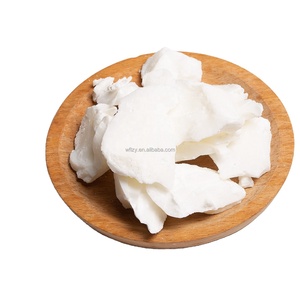
Technical benchmark of raw candle wax bases processed at our OEM manufacturing facility.
| Wax Type / Base Formulation | Melting Point (°C) | Fragrance Load Max (%) | Shrinkage / Adhesion | Combustion Soot Index | Primary Application |
|---|---|---|---|---|---|
| 100% Pure Hydrogenated Soy Wax (Soft Block) | 48°C – 52°C | 8% – 10% | Low Shrinkage / Excellent Glass Adhesion | Ultra Low (< 0.02%) | Container Candles, DIY Bulk Wax, Aromatherapy Jars |
| Luxury Coconut-Soy Botanical Hybrid | 52°C – 56°C | 10% – 12% | Zero Shrinkage / Creamy Top Surface | Zero Visible Soot | High-End Luxury Scented Jars, Atelier Collections |
| Pillar & Votive Hard Vegetable Wax | 58°C – 64°C | 6% – 8% | Controlled Shrinkage / Clean Mold Release | Very Low (< 0.05%) | Standalone Pillars, Tapers, Wax Melts, Car Diffusers |
| Refined Paraffin-Free Mineral Wax Blend | 54°C – 58°C | 10% – 14% | High Adhesion / Zero Polymorph Frosting | Low (Compliant with EN 15426) | Mass Market Retail Jars, High-Throw Fragrance Lines |
Combining European atelier artfulness with high-volume precision engineering for international exporters and brand owners.
Every single batch of raw wax, fragrance oil, and wick assembly processed in our facility undergoes rigorous Quality Control (QC). We maintain full sample retention archives for 24 months, supporting Gas Chromatography-Mass Spectrometry (GC-MS) verification for absolute batch-to-batch consistency.
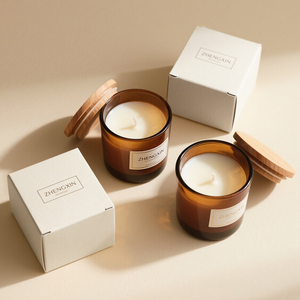
Drawing from classical European perfumery traditions and modern wax compounding, our technicians design proprietary formulas that eliminate common pouring defects such as frosting, tunneling, and wet spots. We customize scent throw performance tailored specifically to ambient humidity and regional climate zones.
Exporting across North America, Europe, Asia-Pacific, and the Middle East requires adherence to regional compliance laws. We deliver comprehensive SDS documentation, IFRA conformity certificates, REACH dossiers, CPSR assessments, and CLP hazard warning art files ready for private label packaging print.
Expert technical responses to common questions raised by brand managers, wholesale buyers, and supply chain directors.
Pure soy wax is derived entirely from hydrogenated soybean oil. While it offers excellent burn characteristics and eco-friendly consumer appeal, it is prone to surface frosting (polymorphic crystallization) and lower fragrance oil retention (typically capped at 7%–9%). Coconut-soy hybrid wax integrates coconut mono- and diglycerides, resulting in a softer crystal structure that dramatically improves glass container adhesion, eliminates sinkholes, smooths out tops after burning, and allows high fragrance loadings of up to 12% without oil sweating.
Trans-oceanic shipping containers can experience ambient temperatures exceeding 55°C. To prevent wax migration, sweating, or melting slump during transit, we formulate export-grade wax blends with elevated drop-melting points and precise hydrogenated palm or botanical stearic acid matrices. Furthermore, our master cartons feature moisture-barrier foil lining and thermal pallet wrap to insulate shipments against sudden temperature swings.
Every commercial order is accompanied by a full technical documentation package, including Safety Data Sheets (SDS) in accordance with OSHA/GHS standards, IFRA 51st Amendment Certificates of Conformity, CLP (Classification, Labelling and Packaging) compliant allergen declarations for European retail, and Certificate of Analysis (COA) confirming physical properties (melting point, color index, needle penetration depth) for every batch.
Yes. Our R&D technical team specializes in reverse engineering and custom compounding. You can send us a benchmark candle sample or raw material spec sheet. We perform differential scanning calorimetry (DSC) and melt kinetics testing to duplicate or upgrade the burn performance, scent diffusion rate, and visual aesthetic of your current line.
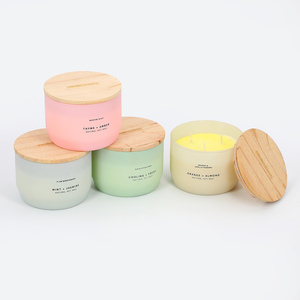
For raw candle wax blocks or flake supply, our standard MOQ starts at 1 metric ton (1,000 kg). For custom-poured private label glass jar candles or specialized novelty shapes, our modular production line allows flexible minimum orders starting as low as 500 to 1,000 units per fragrance SKU, enabling brands to efficiently scale up new product lines.
Botanical waxes have higher viscosity when melted compared to traditional paraffin, requiring specialized wick geometry. We test flat-braided cotton wicks with paper core threads, unbleached linen weaves, and natural hardwood wicks. Wick sizing is determined through burn chamber testing, evaluating flame height, pool diameter, container wall temperature, and hourly fuel consumption rate to guarantee compliance with ASTM F2417 and EU EN 15426 safety benchmarks.
Connect directly with our engineering and procurement team for custom wax compounding, sample requests, IFRA documentation, and competitive wholesale pricing.