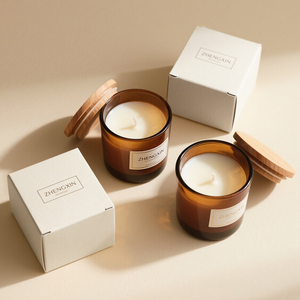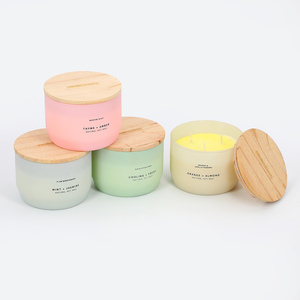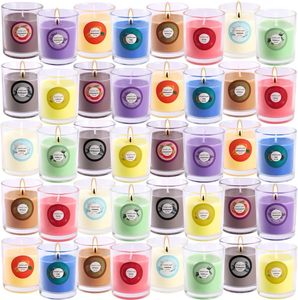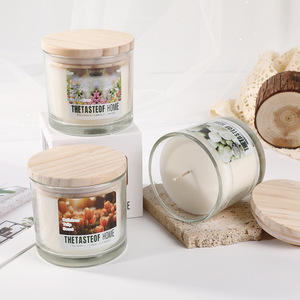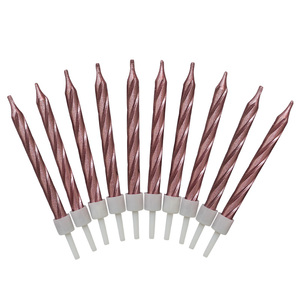
Explore our core manufacturing baseline formats. Fully customizable in vessel geometry, wax formulation, fragrance load, and sustainable retail packaging.
Combining European atelier perfumery mastery with modern automated batch processing to deliver ultra-consistent private label home fragrance collections.
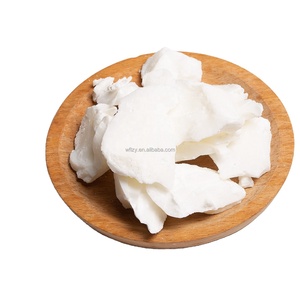
Our proprietary wax chemistry synthesizes pure hydrogenated soybean oils, coconut wax matrices, and ethically sourced mineral waxes. This eliminates soot emissions, petro-chemical off-gassing, and sinkhole formation, delivering a perfectly level, silky top surface after every burn cycle.
We balance cold throw (unlit scent dispersion) and hot throw (melt pool diffusion) using advanced temperature-controlled dosing. Fragrances are incorporated strictly at thermal equilibrium points to prevent volatile terpene degradation and oil syneresis (sweating).
Every OEM run is backed by full technical documentation: IFRA 51st Amendment conformity certificates, Safety Data Sheets (SDS), EU CLP allergen packaging declarations, and Cosmetic Product Safety Reports (CPSR/CPNP) for multi-category luxury lines.
Unlike commercial brokers who outsource pouring to unregulated workshops, our production facility in Orihuela Costa operates under strict ISO 22716 Good Manufacturing Practices (GMP). Every raw batch of soy wax, lead-free cotton wick, wooden core, and fragrance oil concentrate undergoes rigorous incoming quality control (IQC):
Whether you supply finished custom vessels and bespoke essential oils or require full concept-to-shelf turnkey engineering, our factory accommodates flexible production pathways.
| Manufacturing Dimension | OEM (Original Equipment Manufacturer) | ODM (Original Design Manufacturer) |
|---|---|---|
| Target Buyer Profile | Established luxury brands with existing scent formulas, vessels, and artwork. | Boutiques, hotels, e-commerce brands needing full product design & formulation. |
| Wax Base Formulations | Client-specified wax chemistry (Pure Soy, Coconut Soy, Mineral-Vegetable Hybrid). | In-house optimized non-gmo soy wax matrix with zero paraffin guaranteed. |
| Fragrance Engineering | Client-supplied oil compounding or direct replication from client GC-MS notes. | Selection from 60+ pre-tested signature accords or bespoke perfumer formulation. |
| Wick Calibration | Precision match to client jar diameter (Unbleached Cotton, Braided Paper, FSC Wood). | Automated wick sizing for optimal melt pool diameter and flame height balance. |
| Vessel Customization | Client-provided glassware or molds executed to engineering tolerances. | Pantone spray coating, electroplating, matte ceramic, laser engraving, wooden lids. |
| Regulatory & Dossier Support | Batch testing report generation & CLP label technical alignment. | Turnkey IFRA, SDS, CLP allergen calculation, and global export labeling compliance. |
| Production Lead Time | 15 - 25 Days post component arrival. | 20 - 30 Days (Includes pilot sample validation). |
A deep dive into shifted consumer preferences, raw material volatility, environmental mandates, and technological innovations shaping the modern home fragrance industry.
Driven by stringent air quality regulations across North America and Europe (such as the EU REACH framework and state-level indoor VOC caps), luxury consumers and commercial procurement managers are aggressively phasing out petroleum-derived paraffin wax. Modern B2B sourcing now mandates sustainable hydrogenated vegetable wax matrices.
Soy wax, harvested from renewable soybean crops, offers clean combustion, longer burn hours due to its lower melting point (typically 45–52°C), and non-toxic smoke profiles. Forward-looking factories are blending soy with coconut oil and sunflower wax to elevate fragrance throw without adding synthetic stabilizers.
The home scent market has evolved beyond simple olfactory delivery into multi-sensory interior experiences. The integration of Forest Stewardship Council (FSC) certified natural wooden wicks provides a distinctive subtle crackling sound mimicking a wood-burning fireplace.
From an engineering perspective, wooden wicks generate a wider, shallower flame profile that accelerates melt pool creation. This prevents tunneling in wide-mouth vessels while delivering superior capillary action for viscous, highly concentrated essential oil fragrance blends.
Single-use glass containers are rapidly being replaced by multi-functional, refill-ready vessels. Procurement trends favor heavy-walled frosted glass, stoneware ceramic, volcanic rock, and hand-cast concrete vessels designed to serve as lasting interior decor objects after the wax is fully consumed.
Our OEM factories support this shift by manufacturing custom wax melt refills and drop-in wax inserts engineered to fit branded vessel lines, significantly boosting customer lifetime value (LTV) and reducing supply chain packaging waste.
Consumers no longer purchase candles solely for ambient aroma; they demand aromatherapy benefits backed by neuro-sensory research. Scent formulations are shifting heavily toward functional wellness accords—such as stress-reducing lavender-terpene blends, focus-enhancing citrus-ginger profiles, and grounding cedarwood-vetiver matrices.
Our in-house perfumers combine pure steam-distilled essential oils with bio-based aroma isolates to create complex olfactory pyramids (Top, Heart, and Base notes) that maintain structural stability throughout a 50+ hour burn life.
Key metrics, operational shifts, and risk-mitigation strategies enterprise buyers must implement to stay competitive in the high-growth home fragrance market.
Global supply chain disruptions over recent years have exposed the vulnerabilities of relying solely on mass-scale, single-region suppliers with ultra-high minimum order quantities (MOQs) and 60-day sea freight windows. The future of B2B candle procurement belongs to a hybrid model: agile, regional atelier manufacturing facilities capable of delivering rapid turnaround times, small batch customization, and localized regulatory compliance.
Brands are launching limited-edition seasonal fragrance drops with 500–1,000 unit runs to test real-time market traction before committing to 50,000 unit mass production.
B2B buyers now mandate Scope 1, 2, and 3 carbon footprint reporting for raw materials, requiring factories to source European soy and locally manufactured glass containers.
Integration of smart QR packaging that provides consumers with batch pouring dates, burn optimization tips, and safety data certificates directly on their mobile device.
Detailed technical and commercial answers addressing common engineering, regulatory, and logistics queries from global brand directors.