Top China Pillar Candles Manufacturers & Manufacturer
Global B2B Sourcing, Material Science Engineering & High-Capacity OEM/ODM Manufacturing Guide
In the modern global home fragrance, hospitality, and luxury retail sectors, identifying reliable China Pillar Candles Manufacturers is a strategic procurement decision. As brand owners, bulk distributors, luxury hotel chains, and private-label retailers navigate shifting regulatory standards, consumer demand for non-toxic burn profiles, and supply chain volatility, China’s pillar candle manufacturing ecosystem has undergone a massive technological transformation. Moving far beyond low-cost mass production, leading Chinese candle manufacturers now integrate advanced polymer wax blending, precision wick capillary engineering, IFRA (International Fragrance Association) 51st Amendment compliance, and automated climate-controlled curing lines. This industrial intelligence whitepaper examines the core manufacturing paradigms, physical formulation physics, procurement trends, and regulatory dossiers required to scale commercial candle supply chains through top-tier OEM/ODM manufacturing partnerships.
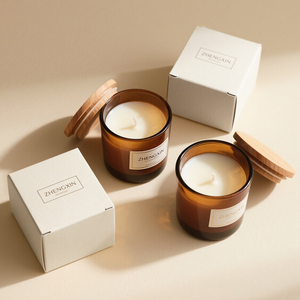
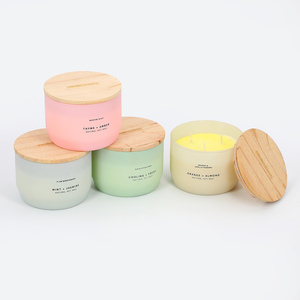
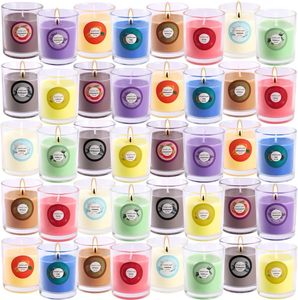
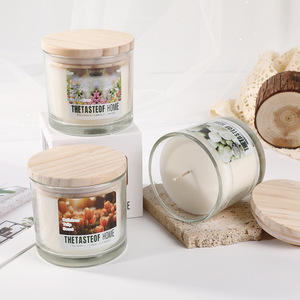
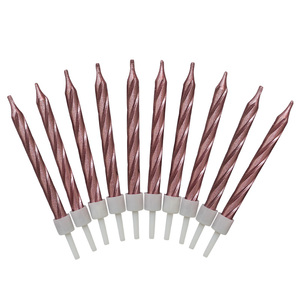
Featured OEM/ODM Pillar & Scented Candle Catalog
Direct-from-factory OEM/ODM candle production lines engineered for global compliance, long burn stability, and premium aesthetics.
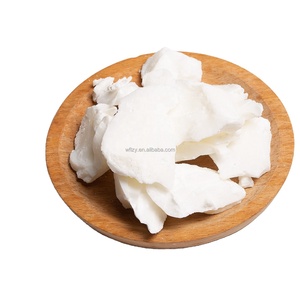
Wholesale Natural Candle Wax Soy Bulk DIY Scented Soy Wax Candles Raw Material Soft Block Soy Wax
Technical Material Science: Pillar Candle Formulation Physics
Unlike container candles, which rely on rigid glass, ceramic, or metal vessels to retain molten wax pools, pillar candles are self-supporting solid monoliths. Engineering a pillar candle demands rigorous thermodynamic stability. A top-tier manufacturer must balance the wax formula's shore hardness, melting point, tensile strength, and contraction co-efficiency to ensure structural integrity while yielding a flawless, dripless burn.
Paraffin vs. Vegetable Wax Chemistry
Fully refined paraffin wax (typically 0.5% oil content max, melting point 58°C–62°C) offers structural rigidity and vivid color retention. However, global market trends favor soy, palm, coconut, and beeswax blends. Soy pillar waxes are engineered through hydrogenating soybean oil to elevate the melting point to 56°C–65°C. Micro-crystalline wax additive blends (1%–3%) are integrated to prevent crystallization brittleness, eliminate frost lines, and enhance opacity.
Capillary Wick Hydro-Dynamics
Combustion stability relies on capillary force balancing the wax pool melt rate with fragrance consumption. OEM manufacturing utilizes flat-braided or square-braided unbleached cotton wicks treated with inorganic ammonium salts (anti-glow treatments). For pillar diameters exceeding 80mm, multi-wick systems or specialized wood-wick capillary matrices prevent "tunneling"—a failure mode where unburned outer walls collapse into the wax pool.
Shrinkage & De-molding Physics
High-volume OEM production requires controlled volumetric contraction during the cooling phase. Vegetable waxes exhibit linear thermal expansion co-efficients distinct from synthetic waxes. Factory cooling tunnels maintained at 18°C–22°C with regulated relative humidity (<45%) allow clean de-molding from aluminum or polycarbonate moulds without vacuum voids, internal cavities, or exterior sink holes near the wick core.
B2B buyers, institutional procurement managers, and brand strategists must align their sourcing with multi-year shifts in global consumer expectations and environmental regulations. Sourcing from China pillar candle manufacturers is no longer purely focused on unit costs; it centers on material innovation, carbon compliance, and smart design integration.
European Union regulations under REACH and CLP (Classification, Labelling and Packaging) regulations, alongside US EPA guidelines, are accelerating the demand for paraffin-free and carbon-neutral formulations. Top Chinese manufacturers have developed proprietary bio-wax formulations derived from RSPO-certified palm oil, European rapeseed, and domestic soy. These sustainable formulations offer cold and hot fragrance throw comparable to traditional paraffin without releasing petro-carbon soot particles.
Traditional smooth cylindrical pillars are increasingly complemented by architectural geometry—ribbed, fluted, spiral, and sculptural human-form pillars. Advanced China manufacturers now utilize 3D-printed master models and fast-curing food-grade liquid silicone tooling. This slashes new product sample turnaround times from 30 days down to 5 working days, allowing brands to capitalize on viral aesthetic design trends rapidly.
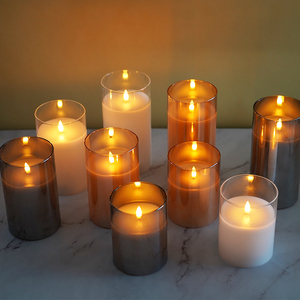
3. Dual-Tech Hybrid: Real Wax Flameless LED Pillars
For commercial hospitality spaces, luxury cruise lines, and event venues subject to strict fire safety codes, real-wax battery-operated LED pillar candles represent the fastest-growing market category. Modern production integrates 100% genuine paraffin or soy wax outer shells with 3D electromagnetic moving-wick modules, 2.4GHz RF remote scheduling, and long-life Lithium-ion battery packs, delivering visual warmth with zero open flame risk.
4. Encapsulated Fragrance Tech & High Loads
Historically, pillar candles were limited to a 3%–5% fragrance oil load because higher oil concentrations softened the wax matrix, leading to structural sagging and weeping. Modern OEM chemistry incorporates micro-encapsulated fragrance carriers and synthetic hardeners (such as hydrogenated castor oil derivatives and specialty stearic acids), enabling scent loads of 8% to 12% while maintaining a crisp, self-supporting outer wall.
Below is a critical comparison of technical parameters evaluated during factory audits and product compliance testing for international distribution.
Burn Rate Stability
Standardized at 3.5g – 4.5g / hour for a standard 75mm diameter pillar. Factory testing conducts 4-hour burn cycles in draft-controlled combustion chambers measuring soot deposition against ASTM F2417 standards.
Thermal Shock & Stability
Storage stability chambers subject production samples to temperature swings between -10°C and +50°C for 72 hours to verify zero oil sweating, cracking, or surface blooming during container ship ocean transit across tropical zones.
Regulatory Dossier Package
Complete export documentation includes SDS (Safety Data Sheet) under GHS standards, IFRA 51st Amendment Certificate of Conformity, Heavy Metal Wick Tests (Lead-Free EN 15493), and CLP UFI Code registration for EU entry.
Enterprise Infrastructure: The Atelier Advantage in China
Evaluating a manufacturer requires reviewing their quality assurance protocols, raw material supply chains, and factory floor automation. Leading Chinese manufacturers incorporate sophisticated production workflows to guarantee batch-to-batch consistency:
Automated Dosing
Computer-controlled liquid wax dosing pumps ensure +/- 0.5g fill accuracy per candle core, eliminating weight variances in commercial cartons.
Fragrance Homogenization
High-shear vacuum mixing tanks maintain uniform oil-wax dispersion at precise temperatures, preventing fragrance separation or settling.
48-Hour Curing Tunnel
Climate-controlled curing belts stabilize crystal structures prior to packaging, guaranteeing consistent burn performance.
In-House QA Testing
Every production lot undergoes burn room testing for flame height (<75mm), soot index (<0.1/h), and smoke density verification.
B2B Sourcing & Technical Procurement FAQ
Addressing the primary operational, logistical, and regulatory questions from global commercial buyers.
Q: What is the standard minimum order quantity (MOQ) for custom private-label pillar candles?
Standard OEM production lines typically require an MOQ of 1,000 to 3,000 units per size and fragrance for custom-colored paraffin or soy pillars. For off-the-shelf standard white/ivory pillar sizes with custom outer packaging, lower MOQs starting at 500 units can be accommodated. Bulk wax raw material orders start at 1,000 kg.
Q: How do manufacturers prevent pillar candles from softening or melting during ocean freight shipping?
Shipping containers passing through equatorial regions can reach interior temperatures of 55°C–65°C. Qualified Chinese manufacturers formulate export-grade pillar candles with high-melting-point additives (microcrystalline or specialty stearic acids) to elevate thermal stability to 62°C+. Additionally, cargo can be protected using reefer (refrigerated) containers or thermal insulated container liners (reflax foils).
Q: What regulatory documentation is mandatory for importing pillar candles into the EU and US?
For the European Union, imports must comply with REACH (EC 1907/2006) for chemical safety, CLP (EC 1272/2008) for allergen labeling, and EN 15493 / EN 15494 fire safety standards. For North America, compliance with ASTM F2417 (Standard Specification for Fire Safety for Candles) and CPSC lead-free wick mandates is required. Top factories supply complete SDS dossiers and IFRA conformity letters per batch.
Q: Can Chinese manufacturers produce 100% paraffin-free soy wax pillar candles that do not collapse?
Yes. Pure soy wax is inherently soft with a low melting point (42°C–48°C), making it unsuited for self-supporting pillars in its unblended state. Chinese wax chemists utilize hydrogenated botanical wax blends—combining high-melt soy formulations with botanical stearic acid and plant-derived hardeners—to yield 100% paraffin-free pillars with a shore hardness exceeding 65D, ensuring structural integrity and clean burn pools.
Q: What is the sample lead time and mass production turnaround schedule?
Existing catalog samples are dispatched within 48 hours. Custom fragrance matching, color tinting, and prototype silicone mold development require 5 to 7 working days. Mass production lead time is typically 25 to 35 days following sample sign-off and deposit receipt, scaling down for reorders.
Q: How is fragrance load optimized to ensure maximum hot throw without causing candle weeping?
Weeping (fragrance oil separating from the solid wax matrix) occurs when the saturation threshold is exceeded. By utilizing synthetic polymer binding agents and controlled high-shear vacuum mixing at precise pouring temperatures (68°C–72°C), manufacturers can achieve stable 8% to 10% fragrance loads in pillar candles without oil sweating or surface weeping.
Initiate Your OEM/ODM Pillar Candle Sourcing Project
Connect directly with our senior engineering team to request custom factory quotes, material sample kits, IFRA compliance dossiers, and private-label packaging solutions.