Engineering Premium Seamless Metal Containers, High-Performance Eco-Coatings & Custom Packaging Solutions for Global Luxury Fragrance Brands.
Direct-from-Factory Catalog
Featured Candle Tins & Turnkey Fragrance Solutions
Explore our top-exported metal vessels, raw candle materials, and luxury jar assemblies manufactured under ISO 9001 and REACH quality management standards.
Bulk Raw Material
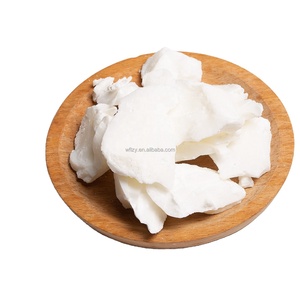
Wholesale Natural Soy Wax Bulk DIY Scented Soy Wax Raw Material
Enterprise Engineering Strengths: The Science of Metal Candle Packaging
As global consumer preferences shift away from fragile, high-emissions heavy glassware toward lightweight, shatterproof, and endlessly recyclable packaging, metal candle tins have emerged as the premier choice for modern home fragrance brands. Manufacturing high-performance tinplate containers requires an intricate balance of metallurgy, surface chemistry, and high-speed precision stamping.
Our state-of-the-art facility operates cleanroom-grade automated production lines specifically calibrated for deep-drawn seamless candle tins. Unlike standard promotional packaging, candles impose extreme thermal and chemical demands on metal structures. The inner surface must withstand sustained exposure to molten hot-wax blends (up to 85°C/185°F) loaded with volatile fragrance oil concentrations ranging from 6% to 12% without stripping, blistering, or reacting with the metal substrate.
"Information Gain Insight: Fragrance integrity is heavily compromised when raw metals oxidize under heat. Our proprietary food-grade, heat-resistant varnish system acts as an impenetrable barrier, preventing essential oil degradation while preserving cold and hot scent throw for over 24 months."
Vertical Integration: From Raw Tinplate Coil to Finished Luxury Packaging
We source prime-grade Electrolytic Tinplate (ETP) featuring precise temper classifications (T2 through T4) to guarantee uniform ductility during deep drawing. This eliminates micro-fracturing along the drawn edges—a leading cause of wax leakage during vertical hot-pour operations. Furthermore, our integrated laboratory performs continuous quality control across four critical pillars:
Zero-Leak Seamless Drawing
Single-piece drawn construction removes side-seams completely, eliminating vertical stress points and liquid wax weepage risks during customer burning cycles.
Heat-Stabilized Internal Lacquers
Epoxy-phenolic and organosol inner coatings engineered to remain inert up to 220°C, ensuring compliance with US FDA 21 CFR 175.300 and EU REACH regulations.
Precision Lid Friction Tuning
Custom-engineered step-cap and slip-lid closures maintain optimal air-tightness, locking in subtle top fragrance notes while preventing lid slip during transit.
Advanced Surface Decoration
8-color high-definition offset lithography, tactile embossing, soft-touch matte varnishes, and metallic foil stamping for elevated brand positioning.
Material Comparison Matrix: Optimizing B2B Packaging ROI
Selecting the optimal container material is a strategic decision that directly impacts shipping costs, logistics risk, thermal efficiency, and sustainability compliance. The matrix below outlines why leading global candle brands are increasingly reallocating portfolio SKUs from heavy glassware to engineered tinplate containers.
Evaluation Metric
Seamless Tinplate Tins
Soda-Lime Glass Jars
Ceramic / Stoneware Vessels
Freight Weight Impact
Ultra-Light (~30g-50g)
Heavy (~250g-450g)
Very Heavy (~350g-600g)
Transit Breakage Rate
0.00% (Shatterproof)
3.5% - 7.0% (Requires Bubble-wrap)
2.0% - 5.0% (High Cushioning Need)
Thermal Shock Resistance
Excellent (Fast Heat Dissipation)
Moderate (Risk of Thermal Cracking)
High (Retains Heat Excessively)
Recyclability Rating
100% Infinitely Recyclable
Recyclable (Energy Intensive)
Non-Recyclable (Landfill Bound)
Branding Surface Area
360° Direct Litho Print & Embossing
Limited (Paper Label / Screen Print)
Limited (Glaze / Engraving)
Unit Production Cost
Highly Cost-Effective ($)
Moderate ($$)
High ($$$)
Procurement Foresight: Future Trends in Candle Packaging & Sourcing
As the global candles and home fragrance market accelerates toward a projected $13.3 billion valuation by 2028, procurement managers face changing regulatory landscapes, evolving consumer aesthetics, and volatile logistics costs. Sourcing strategies must adapt to three macroeconomic trends driving the container industry:
1. The Shift to Circular Economy Standards and Post-Consumer Recycled Metals
European Union packaging directives (including the updated PPWR regulation) are instituting strict mandatory recycled content thresholds and end-of-life recyclability metrics. Metal tins inherently possess a permanent circular lifecycle—over 75% of all aluminum and steel ever produced remains in productive use today. Modern candle brand procurement is prioritizing suppliers capable of providing certified post-consumer recycled (PCR) tinplate coils with verifiable chain-of-custody documentation.
2. Rise of E-Commerce Direct-to-Consumer (D2C) Durability Requirements
With online sales accounting for over 38% of home fragrance retail volume, shipping damage has become a key driver of margin erosion and customer dissatisfaction. Glass jars require secondary protective cartons, molded pulp inserts, and bubble wrapping, escalating dimensional shipping weight. Seamless metal tins eliminate transit breakage entirely while allowing ultra-compact, gift-ready secondary packaging that reduces parcel shipping charges by up to 30% per unit.
Visual appeal alone no longer suffices on retail shelves. 2025–2030 branding trends favor multi-sensory physical interaction. Advanced OEM buyers are leveraging micro-embossed lid patterns, soft-rubberized exterior coatings, brushed metallic hues (such as rose gold, champagne gold, and matte slate blue), and custom geometric shapes (hexagonal, octagonal, flared rim) to create immediate tactile luxury distinction.
"White-label partners and private-label buyers require speed-to-market. Our agile tooling center can produce custom embossing dies in under 10 days and deliver initial pre-production samples within 14 business days."
What is the Minimum Order Quantity (MOQ) for custom-printed vs. stock candle tins?
+
For standard stock tin sizes (in silver, black, or gold finishes), our factory supports low-threshold orders starting at 3,000 to 5,000 units per size. For fully customized offset-printed tins featuring brand Pantone colors, custom embossing, or unique lacquers, our standard production run starts at 10,000 units per design. This enables optimal high-speed printing sheet efficiency and keeps unit costs highly competitive.
How do you test and guarantee that tin linings won't react with fragrance oils?
+
Every batch of lacquered tinplate undergoes rigorous laboratory accelerated aging testing. We submerge sample tins in concentrated fragrance blends (up to 15% fragrance load in soy, paraffin, and coconut wax matrixes) held at 45°C (113°F) for 30 consecutive days—simulating over 18 months of standard room-temperature shelf life. We test for cross-hatch coating adhesion (ASTM D3359), surface pitting, discoloration, and chemical leaching.
Are your candle tins compliant with EU REACH, US FDA, and California Prop 65 regulations?
+
Yes. All raw electrolytic tinplate, internal lacquers, printing inks, and external varnishes are certified 100% free of BPA, lead, phthalates, cadmium, and heavy metals. We furnish full IFRA conformity support documentation, Material Safety Data Sheets (MSDS), and SGS/TÜV chemical safety compliance reports required for seamless import cleared through US and EU customs.
What lid constructions are recommended for preserving aroma shelf-life?
+
We manufacture three primary lid variants: (1) Classic Slip-Lids with raised inner beads for standard friction closures; (2) Step-Caps for sleek flush-fit vertical silhouettes; and (3) Gasket-Sealed Window/Solid Lids incorporating food-grade silicone or PE liners that create an airtight vacuum lock to eliminate volatile fragrance oil evaporation during warehouse storage.
What is the typical production lead time for OEM/ODM international export orders?
+
Once digital artwork proofs and physical color matching samples (3D metal proofs) are approved by your team, mass production is completed within 20 to 25 calendar days. Ocean freight delivery to European and North American ports generally spans 18 to 30 days, while express air freight for sample batches or fast-track launches takes 5 to 7 business days.
Can your factory support complete turnkey private-label candle production?
+
Absolutely. In addition to vessel manufacturing, our facility maintains automated hot-pour wax filling suites. We can blend your proprietary fragrance formulations into natural soy wax, coconut wax, or mineral blends, insert lead-free cotton or wooden wicks, perform precision top-surface leveling, label, and assemble finished retail packaging under one unified ISO-certified roof.
Ready to Upgrade Your Candle Packaging & Bulk Supply Chain?
Partner directly with a proven export manufacturer. Contact our engineering team today for technical consultation, complimentary sample kits, and instant factory-direct pricing quotes.